Young people who are Not in Education, Employment or Training (NEET) remain one of the most pressing social and economic challenges across Europe and its neighbouring regions. NEET youth are at increased risk of long-term unemployment, poverty, social exclusion and disengagement from civic life. Both the European Union and Türkiye have recognised the urgency of this issue and have developed structured policy responses, programmes and monitoring mechanisms to tackle it.
The European Union Approach to NEET Youth
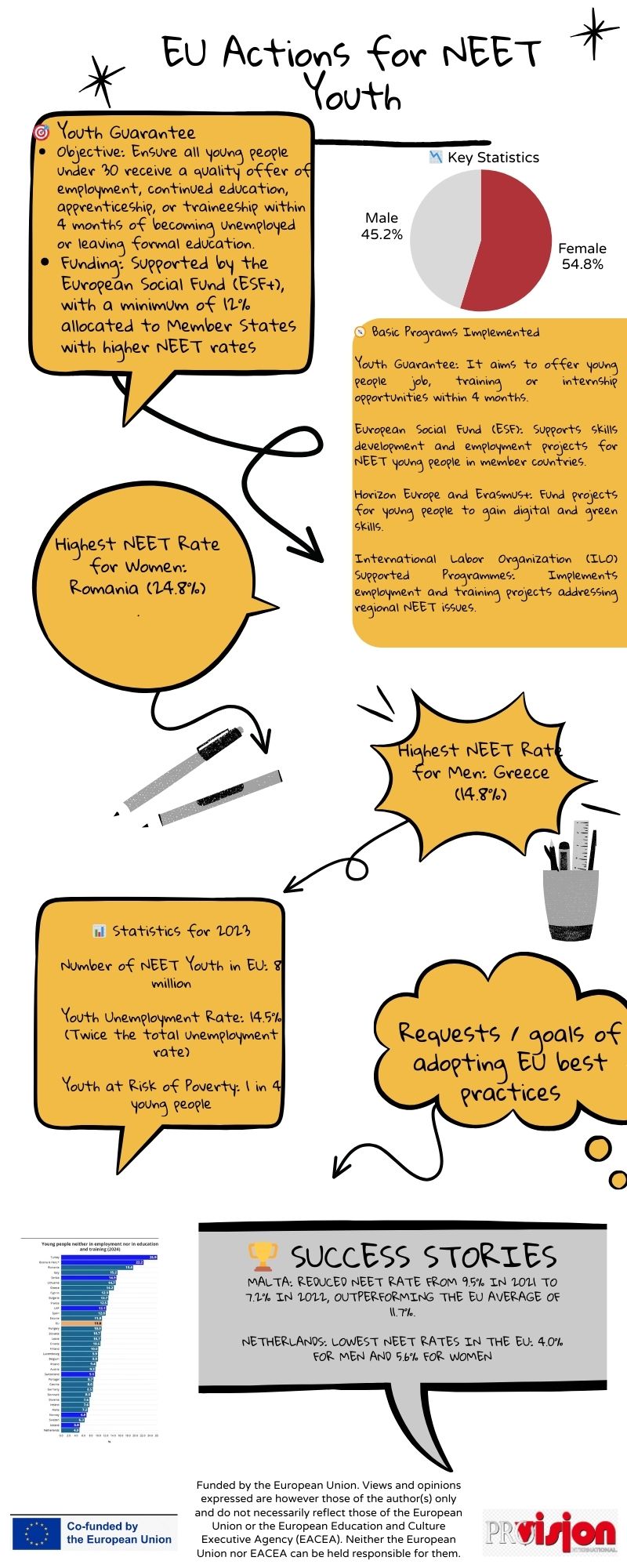
At EU level, the fight against youth inactivity is anchored in a comprehensive policy framework that combines early intervention, employment support and social inclusion. One of the cornerstone initiatives is the Youth Guarantee, which aims to ensure that all young people under the age of 30 receive a quality offer of employment, continued education, apprenticeship or traineeship within four months of becoming unemployed or leaving formal education.
This approach is financially supported primarily through the European Social Fund Plus (ESF+), with increased allocations for Member States facing higher NEET rates. Complementary programmes such as Erasmus+ and Horizon Europe further strengthen the framework by supporting mobility, skills development, digital competences and green transition skills, while international actors like the International Labour Organization (ILO) contribute through regional employment and training initiatives.
Despite these efforts, the scale of the challenge remains significant. In 2023, the EU recorded approximately 8 million NEET youth, with a youth unemployment rate of 14.5%, nearly double the overall unemployment rate. Gender disparities persist across the Union: women represent 54.8% of NEET youth, with particularly high female NEET rates in countries such as Romania, while Greece records one of the highest NEET rates among men. At the same time, examples of success demonstrate the effectiveness of sustained policy action – Malta and the Netherlands, for instance, have significantly reduced NEET rates through targeted, long-term strategies.