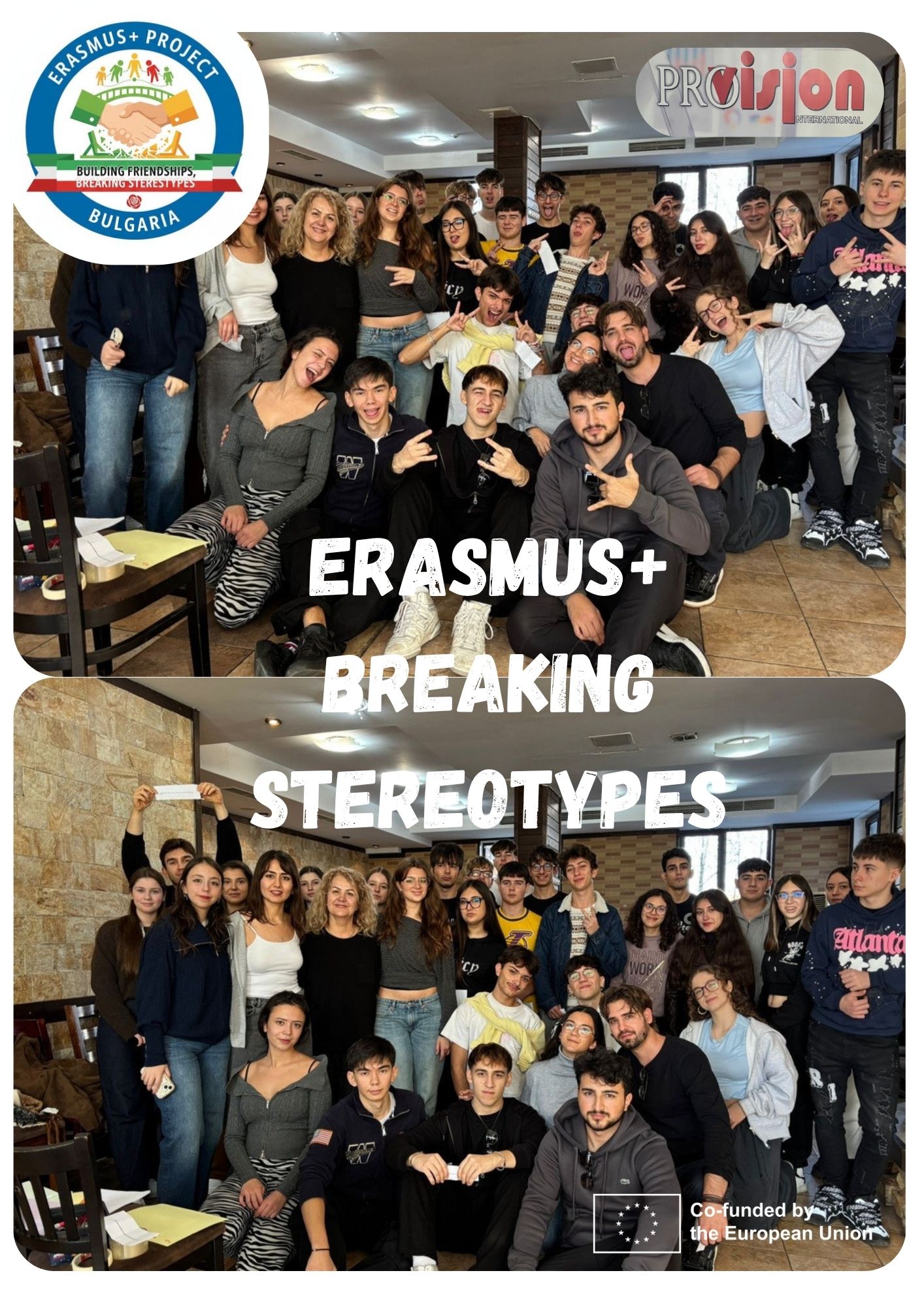
The newsletter created within the Erasmus+ youth exchange “Breaking Stereotypes – Building Friendships” is much more than a simple project summary. It is a collective reflection of the experience, learning journey, and personal voices of the young people who took part in the mobility. Through photos, testimonies, activity summaries, and useful information about other European opportunities, the magazine captures the spirit of a project dedicated to challenging prejudice, promoting intercultural understanding, and building real friendships across borders.
The publication opens with strong visual identity and group photos that immediately communicate the energy and diversity of the exchange. From the very beginning, the magazine makes clear that this was an international youth initiative bringing together participants from different backgrounds under the shared values of tolerance, inclusion, and dialogue. Its structure is clear and youth-friendly, with sections dedicated to the project itself, daily activities, interviews, and information about further Erasmus+ opportunities. This makes the newsletter both informative and accessible for readers who want to understand what happened during the exchange.
One of the strongest parts of the newsletter is the section explaining what was done during the project. It describes how participants took part in team-building activities, workshops on identity, stereotypes, discrimination, and Islamophobia, as well as sessions on media influence, fake news, and online hate speech. The text shows that the project did not approach these topics only theoretically, but through reflection, comparison of personal experiences, and interactive learning methods. It also highlights the role of creativity, including theatre exercises, role-play, and the graffiti activity “Spray for Change”, which helped participants express messages of tolerance and social awareness. The same section also underlines that participants worked together on digital outcomes such as videos, a blog, and the magazine itself. These elements make the newsletter a direct product of youth participation, not just a report written about them.
Another important contribution of the newsletter is its summary of the group process. It explains how the exchange began with icebreakers, expectation-setting, and the joint creation of group rules, helping transform a diverse group of strangers into a united learning community. It also presents meaningful highlights of the programme, including intercultural nights where Bulgaria, Spain, Italy, Romania, and Türkiye shared food, music, dances, and traditions, as well as a particularly powerful visit to a local mosque. This visit appears as one of the most important educational moments in the magazine, because it gave participants the opportunity to speak directly with community members and challenge misconceptions in a real-life setting. Through these examples, the newsletter shows how non-formal education can create safe but transformative spaces for reflection and change.
The interview pages are especially valuable because they bring forward the voices of the participants themselves. Young people from Türkiye, Romania, Spain, Italy, and Bulgaria share what they enjoyed most, what surprised them, which activities helped them learn the most, and what they understood better about Islamophobia. Their answers reveal common themes: meeting new people, discovering other cultures, recognising misinformation, and understanding that prejudice often comes from lack of direct contact and poor information. Several participants point to intercultural nights, presentations, and conversations about Islam as the most impactful parts of the exchange. Others reflect on how meeting real people helps humanise issues that are often reduced to stereotypes. These testimonials make the newsletter especially authentic, because they show the project’s impact through the words of those who experienced it directly.
The final content section broadens the perspective of the magazine by introducing readers to other Erasmus+ and European youth opportunities. It includes short information about the European Youth Portal, European Solidarity Corps, Erasmus for Young Entrepreneurs, SALTO-YOUTH, Youthpass, DiscoverEU, Erasmus Intern, and Mladiinfo. In this way, the newsletter does not only document one completed mobility, but also encourages young people to continue their international journey. It sends a strong message that one Erasmus+ experience can be the beginning of many more opportunities for learning, travelling, volunteering, entrepreneurship, and personal development.
Overall, the newsletter succeeds in documenting the project in a dynamic and meaningful way. It combines reflection, education, creativity, and dissemination, while keeping the focus on the participants and their learning journey. It shows how a youth exchange can move beyond the mobility itself and become a tool for awareness-raising, empowerment, and inspiration for other young people. As a dissemination product, the magazine is effective because it is visual, personal, easy to follow, and rich in content. Most importantly, it reflects the core message of the project: that stereotypes can be challenged and friendships can be built when young people are given the chance to meet, listen, and learn together.
To read more, please click on the newsletter below:
Funded by the European Union. Views and opinions expressed are however those of the author(s) only and do not necessarily reflect those of the European Union or the European Education and Culture Executive Agency (EACEA). Neither the European Union nor EACEA can be held responsible for them.