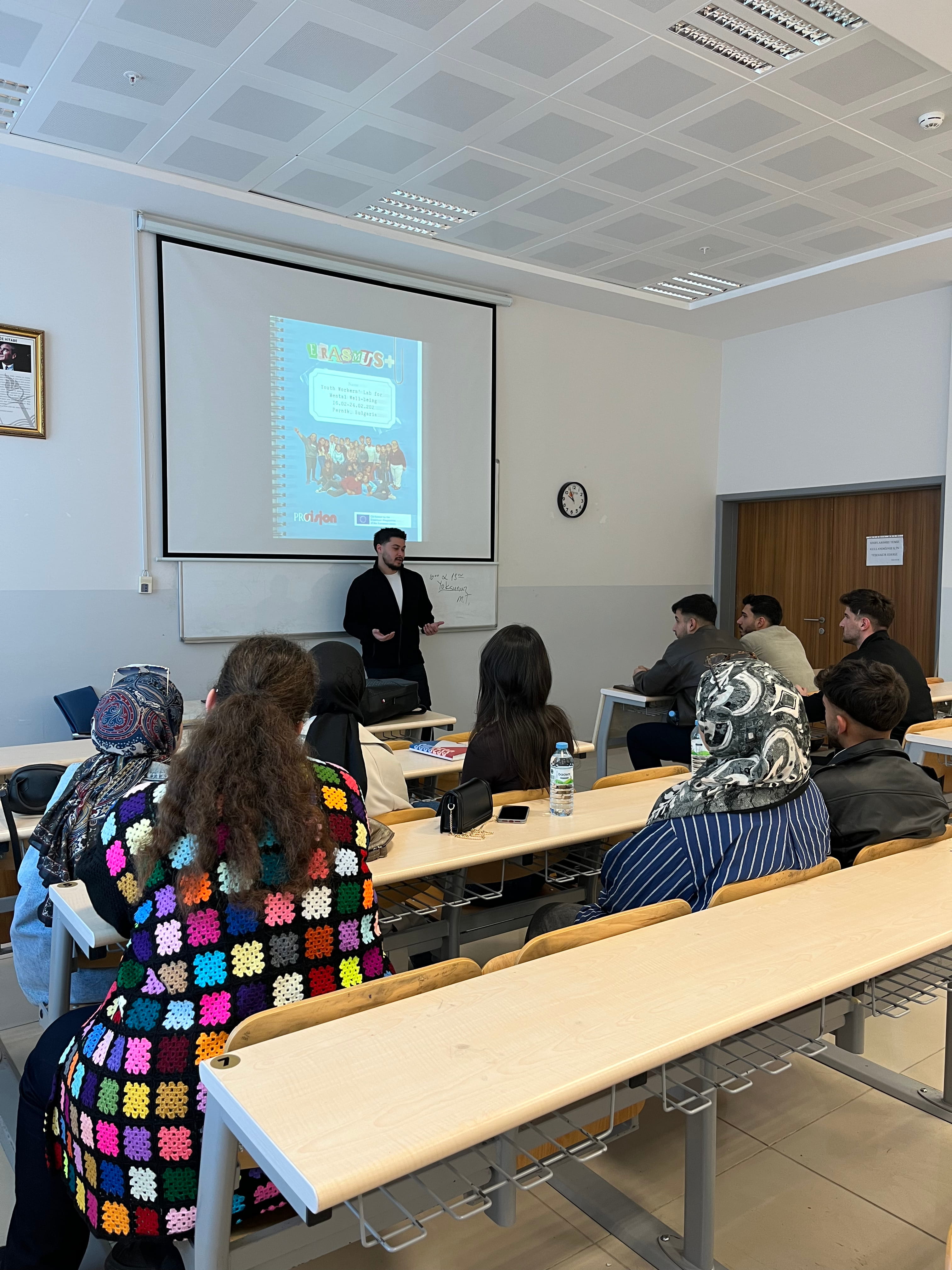
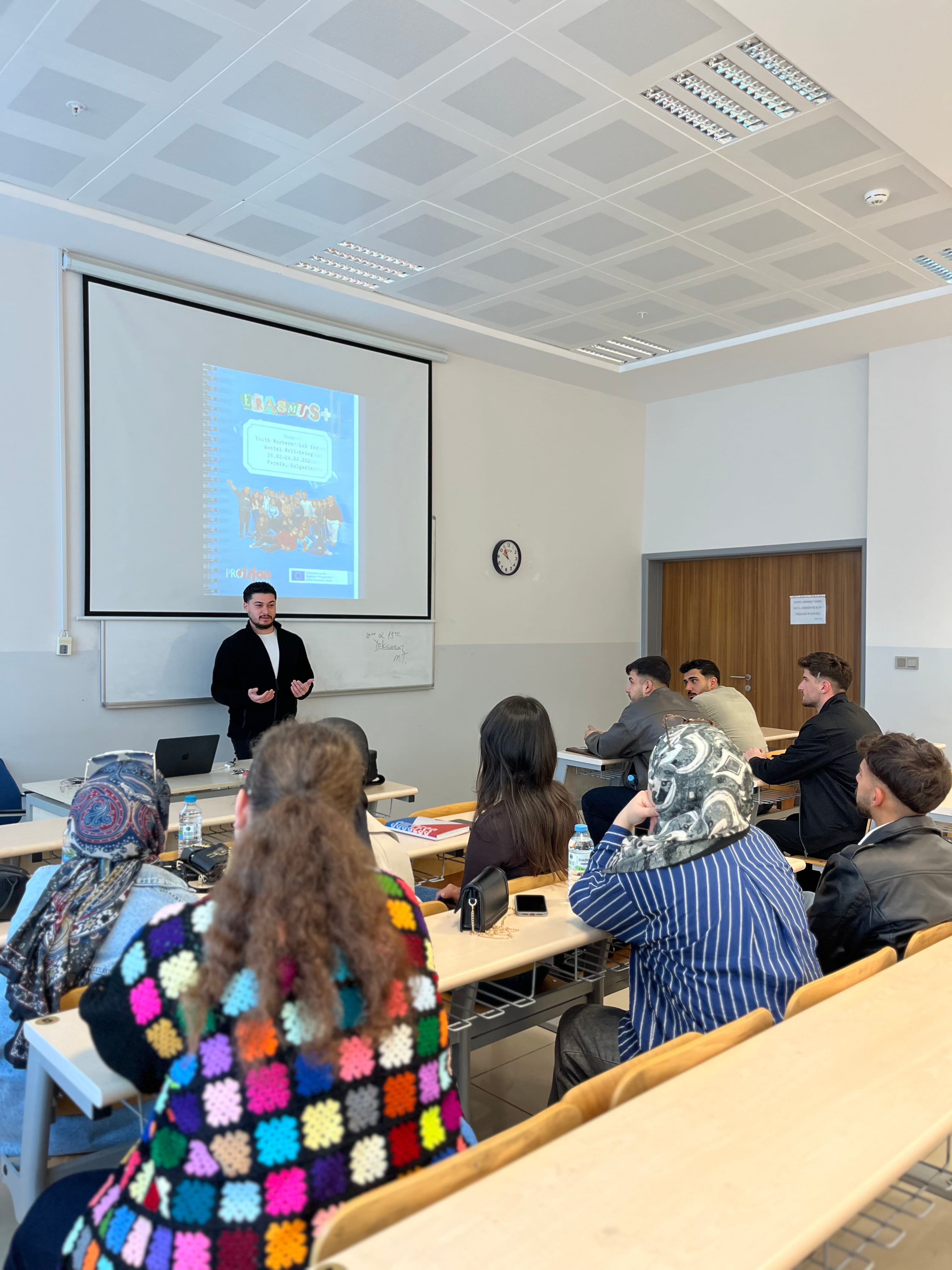
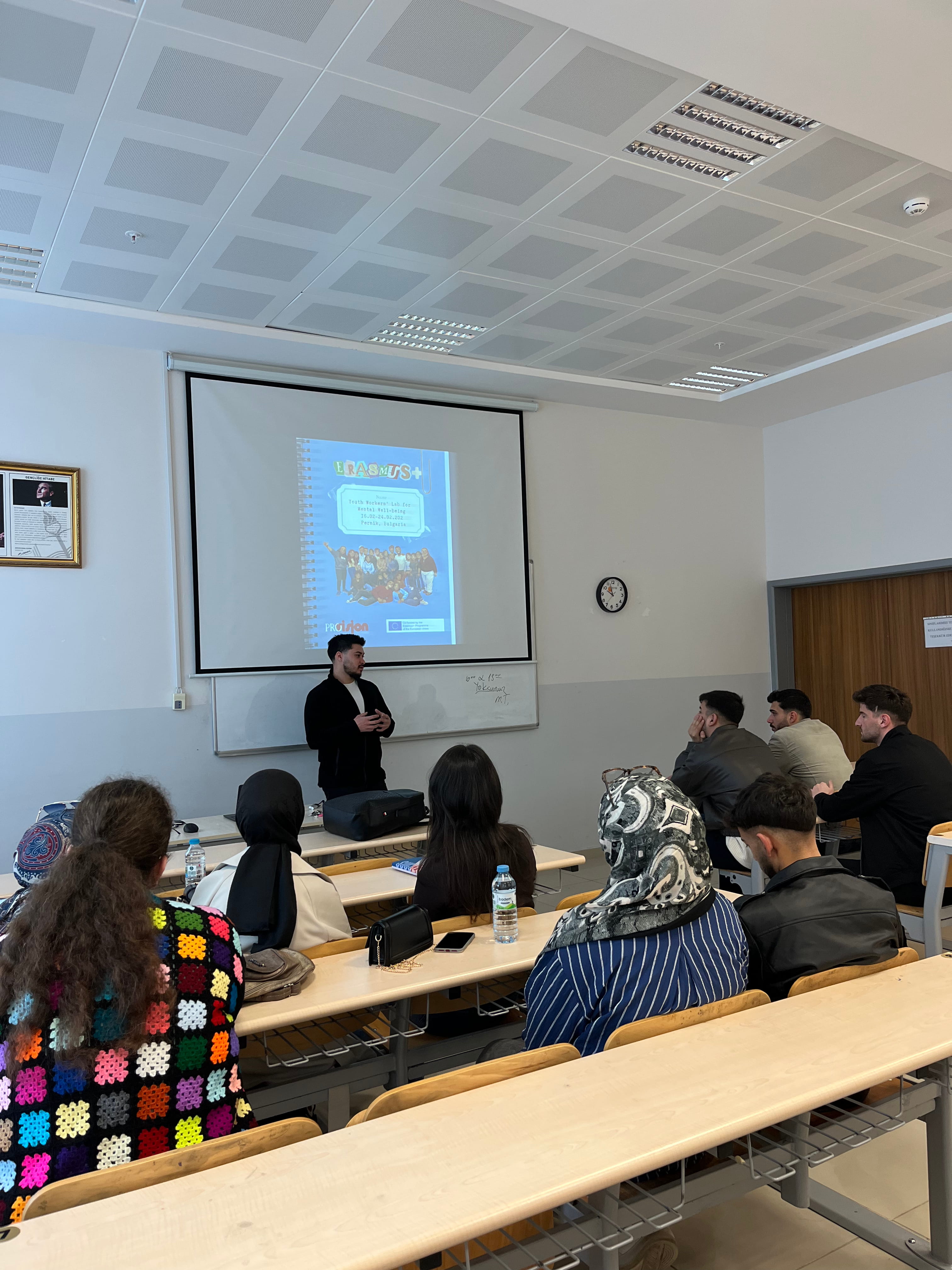
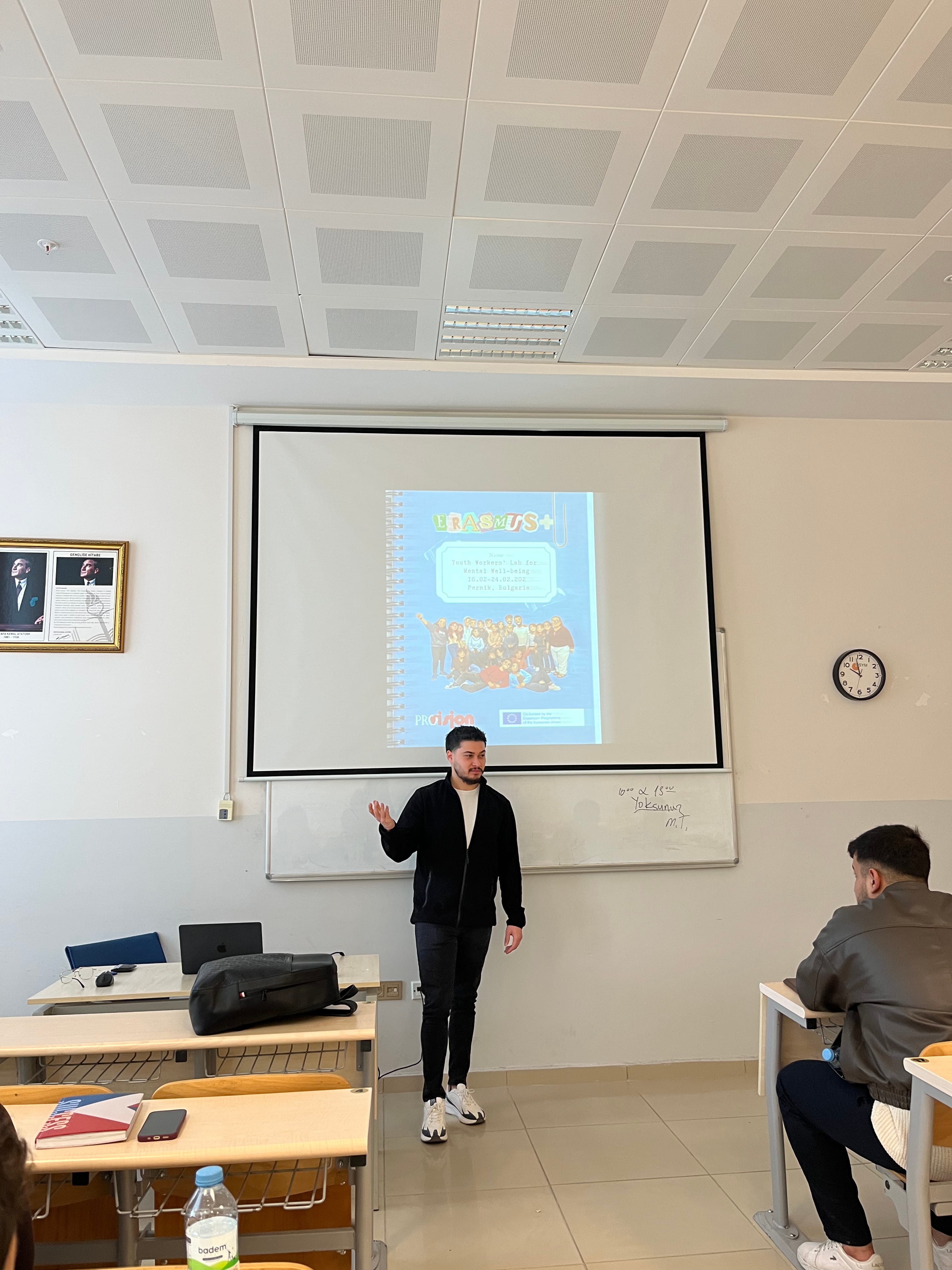
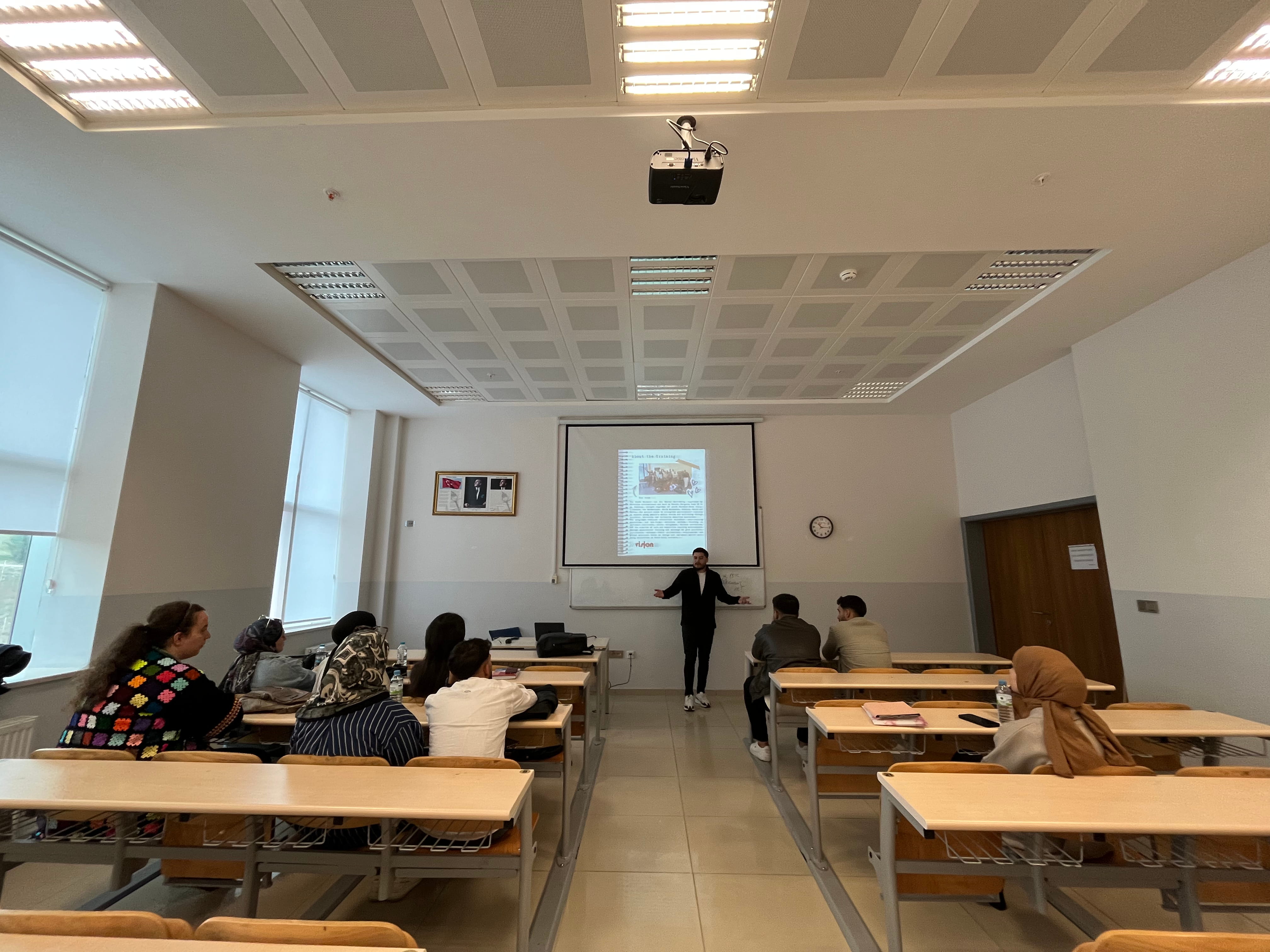
Another dissemination activity was organised at Kırşehir Ahi Evran University with the participation of students from the Psychological Counselling and Guidance department. The presentation aimed to share the experiences, knowledge, and learning outcomes gained during the Erasmus+ training course “Youth Workers’ Lab for Mental Well-being,” which took place in Pernik.
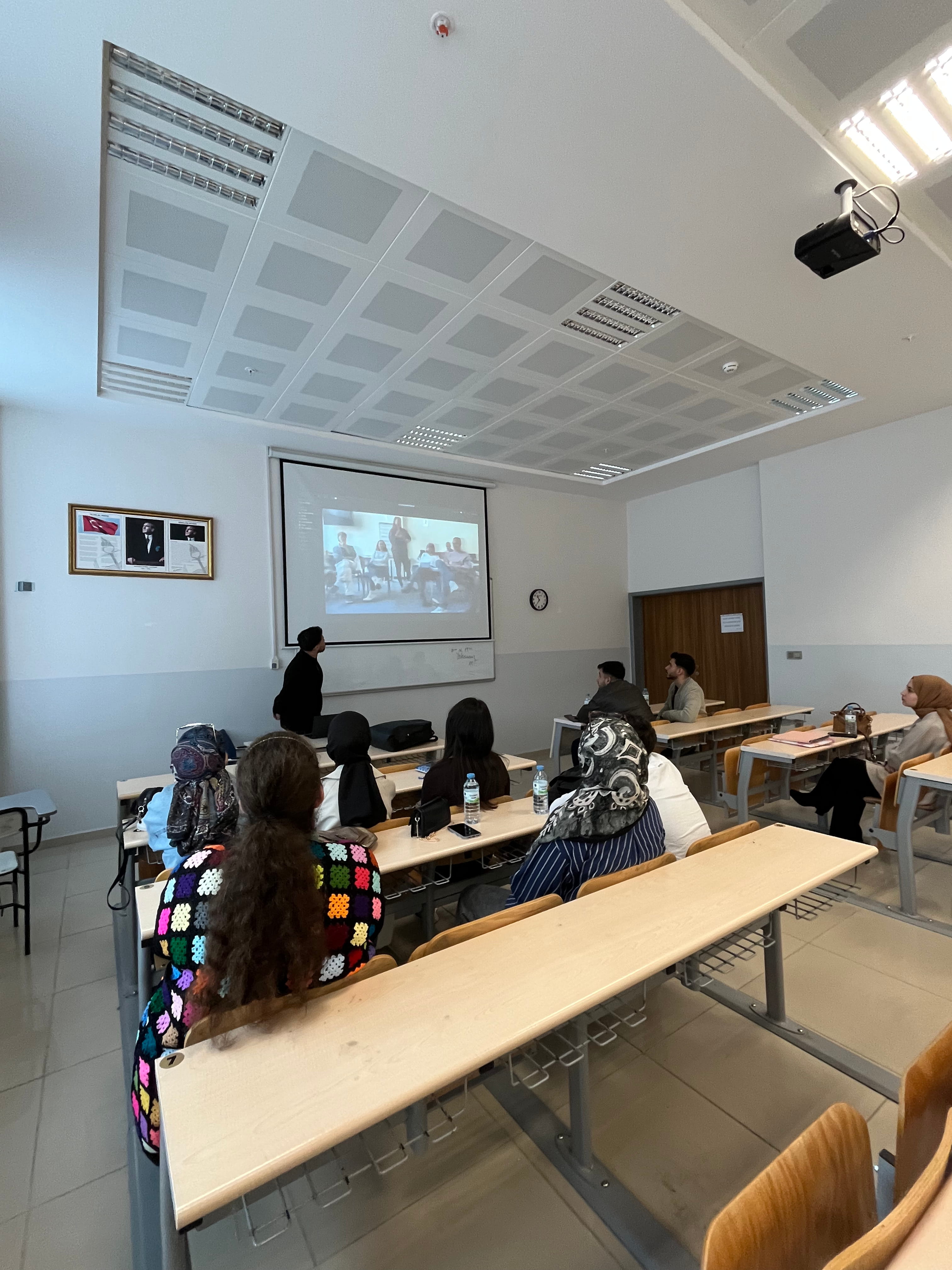
The session began with an introduction to the overall objectives and structure of the Erasmus+ project, providing participants with a better understanding of the purpose and educational framework of international mobility activities focused on youth work and mental well-being. In order to create a more engaging and relatable atmosphere, a short video from the training course was presented, allowing attendees to observe the learning environment, group dynamics, and practical activities experienced during the mobility.
The presentation focused on several key themes connected to mental well-being and youth work. Participants explored different methods and approaches used across countries to support emotional well-being, as well as the perspectives and experiences shared by youth workers from diverse cultural and professional backgrounds. The session also provided insight into how Erasmus+ projects are structured and implemented, including examples of non-formal educational activities such as group work, discussions, experiential learning exercises, and reflective practices.
Particular attention was given to practical tools and approaches related to emotional awareness, stress management, communication, and psychological support. Through interactive discussions and active participation, attendees were encouraged to reflect on how these methods and practices could be applied within their own academic studies and future professional work in the field of counselling, education, and youth support.
The activity concluded with an engaging question-and-answer session that created meaningful dialogue between the presenter and the audience. Participants showed strong interest both in the topic of mental well-being and in the opportunities provided through Erasmus+ projects. The discussion encouraged deeper reflection on the role of youth work in promoting mental health and highlighted the importance of creating supportive environments for young people.
Overall, the dissemination activity successfully transferred the knowledge and experiences gained during the training course while inspiring participants to further explore international mobility, non-formal education, and mental health-related practices within their own communities and professional pathways.
Funded by the European Union. Views and opinions expressed are however those of the author(s) only and do not necessarily reflect those of the European Union or the European Education and Culture Executive Agency (EACEA). Neither the European Union nor EACEA can be held responsible for them.