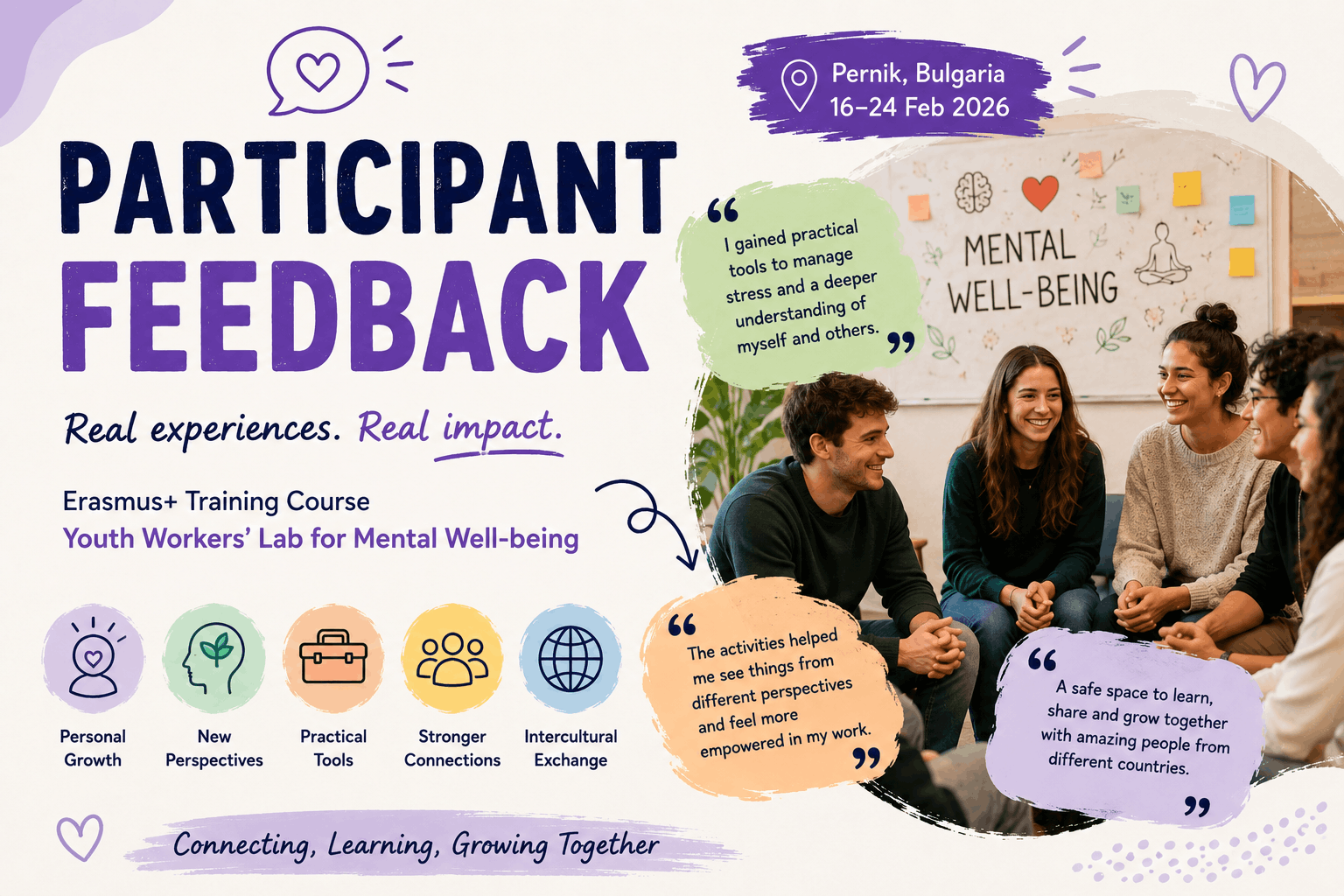
Marija described her experience in the Erasmus+ training course “Youth Workers’ Lab for Mental Well-being” as deeply inspiring and transformative. For her, the project addressed one of the most important challenges young people face today — mental well-being — through an engaging and interactive learning experience that combined practical methods, emotional reflection, and intercultural exchange. She explained that the workshops were not only educational, but also highly applicable to real youth work situations, providing tools and approaches that can be used directly in local communities when supporting young people facing stress, anxiety, and emotional pressure.
One of the aspects Marija appreciated the most was the safe and open atmosphere created during the project. She felt that participants were encouraged to honestly share personal experiences, cultural values, and emotional challenges without fear of judgment. Discussions related to the influence of technology, artificial intelligence, and social media on young people’s mental health were particularly meaningful for her, as they helped her better understand the hidden pressures many young people experience in their daily lives.
Reflecting on her personal development, Marija shared that the project changed the way she thinks about mental health and emotional well-being. Before participating, she mostly viewed mental well-being as an individual responsibility. However, through listening to the stories and perspectives of participants from different countries, she came to understand that mental health is also a collective and social responsibility that requires empathy, support systems, dialogue, and emotionally safe environments. The project helped her become more reflective, emotionally aware, and sensitive to the realities and stress factors affecting young people across different cultures and communities.
Marija explained that the transformation she experienced was strongly connected to the practical and experiential nature of the activities. Meditation sessions, movement-based exercises, storytelling, and group reflections allowed her to better understand herself while also building trust and emotional connection with others. As a concrete follow-up action after the project, she plans to organize a workshop in her local community focused on stress management among young people. She also intends to integrate mindfulness exercises and personal storytelling methods into her youth work activities, while raising greater awareness about the impact of artificial intelligence and social media on emotional well-being.
For Marija, one of the most useful activities during the training course was the workshop focused on identifying the causes of stress and exploring practical coping strategies through real-life examples from different countries. She found this activity especially valuable because it demonstrated that stress management is not universal and that different approaches are needed depending on the situation and the individual. Meditation and mindfulness exercises also stood out as powerful yet simple tools that can easily be integrated into youth work in order to help young people feel calmer, supported, and emotionally heard.
Marija strongly believes that Erasmus+ projects are extremely valuable opportunities for young people and would highly recommend participating in them. According to her, these experiences support both personal and professional growth by helping participants build confidence, communication skills, empathy, intercultural understanding, and practical competences that can later benefit their communities. Most importantly, she believes Erasmus+ projects empower young people to become more open-minded, socially responsible, and active citizens.
Funded by the European Union. Views and opinions expressed are however those of the author(s) only and do not necessarily reflect those of the European Union or the European Education and Culture Executive Agency (EACEA). Neither the European Union nor EACEA can be held responsible for them.