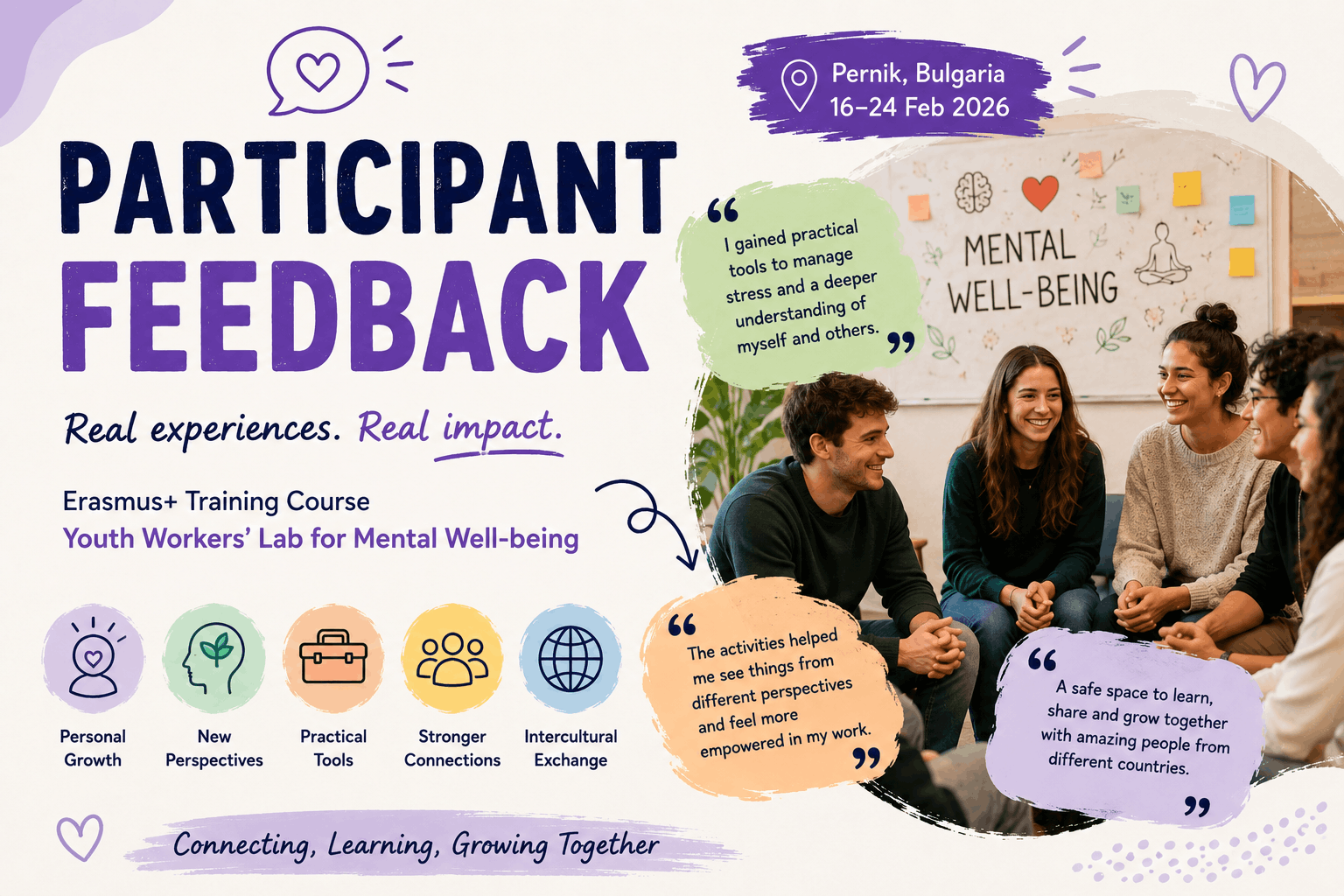
Slavomir described the Erasmus+ training course “Youth Workers’ Lab for Mental Well-being” as a highly educational and eye-opening experience that broadened his understanding of mental health and youth well-being in an international context. Throughout the project in Pernik, he participated in workshops, discussions, and practical exercises focused on stress management, emotional resilience, communication, and the growing influence of technology and social media on young people’s lives.
One of the aspects Slavomir valued most was the intercultural exchange that took place during the training. Listening to the experiences and perspectives of participants from different countries helped him better understand how social, cultural, and environmental factors shape mental health challenges among young people across Europe. The project encouraged him to think more critically about emotional well-being and the role youth workers can play in supporting young people facing stress, anxiety, and emotional pressure.
Slavomir also appreciated the practical methods introduced during the training, especially activities connected to mindfulness, emotional reflection, and creative expression. These activities demonstrated how non-formal education can create meaningful learning experiences while also supporting emotional balance and personal growth. As a result of the project, he plans to use some of these approaches in his own community and continue promoting awareness around mental well-being and healthy coping strategies among young people.
For Slavomir, Erasmus+ projects represent much more than educational mobility opportunities — they are experiences that encourage openness, empathy, confidence, and intercultural understanding. He would strongly recommend such projects to other young people because of the positive impact they can have on personal development and social awareness.
Funded by the European Union. Views and opinions expressed are however those of the author(s) only and do not necessarily reflect those of the European Union or the European Education and Culture Executive Agency (EACEA). Neither the European Union nor EACEA can be held responsible for them.