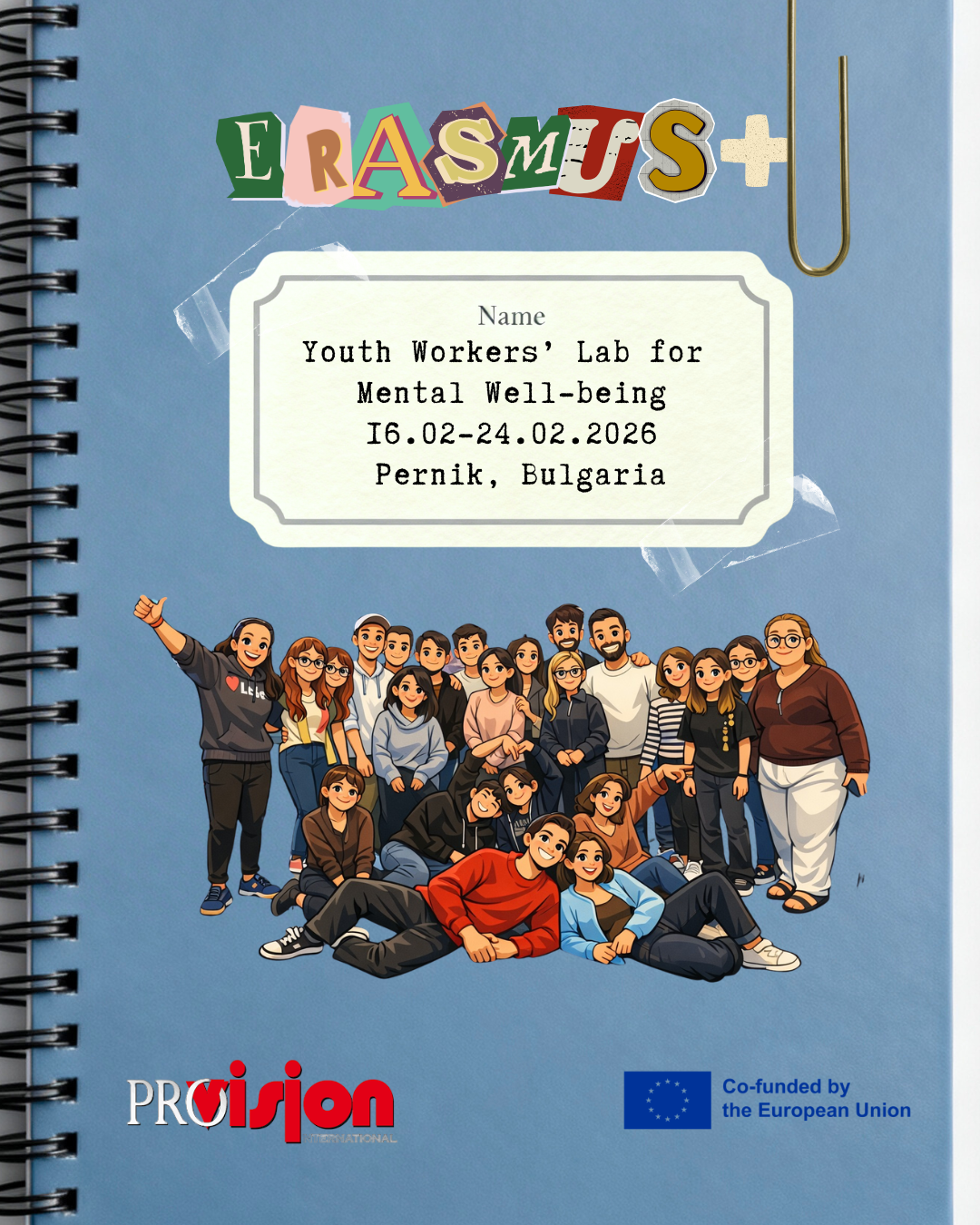
From 16 to 24 February 2026, Pernik, Bulgaria hosted the Erasmus+ training course “Youth Workers’ Lab for Mental Well-being”, organized by ProVision International. The project brought together 24 youth workers from Bulgaria, Italy, Lithuania, the Netherlands, North Macedonia, Romania, Spain, and Turkey to explore practical approaches for supporting young people’s mental health and emotional well-being.
Throughout the training, participants engaged in a rich programme of non-formal education activities focused on emotional resilience, stress management, burnout prevention, emotional intelligence, and the creation of safe and supportive learning environments for young people. The programme combined experiential learning, peer exchange, reflection sessions, creative workshops, and practical simulations.
The training began with team-building activities, a treasure hunt around Pernik, and sessions dedicated to understanding participants’ expectations and experiences connected to well-being. During the following days, participants explored topics such as youth realities, mental health in everyday life, emotions and feelings, and the challenges young people face today. Creative methodologies such as theatre, storytelling, movement exercises, clay modelling, and experiential games were used to encourage reflection and empathy.
An important highlight of the project was the development of innovative “Strategy Tools for Dealing with Youth Mental Health” – practical methods created by participants to help youth workers support emotional resilience and self-awareness among young people. These tools included activities such as “Emotionally Artsy Theatre,” “Face the Unknown,” “Identifying Emotions,” “Inside – Outside,” “The Human Algorithm: A Living Systems Simulation,” and “The Tree of Resilience and Gratitude.”
The intercultural dimension of the project also played a key role. During the International Evening, participants presented their cultures through traditional food, games, dances, and interactive activities, creating a vibrant atmosphere of exchange, understanding, and connection between the different countries represented in the project.
The training course provided participants with practical tools and methodologies that they can now apply in their local communities and youth work practice. Beyond the educational activities, the project created a supportive international environment where participants could openly discuss mental health, share experiences, and build meaningful connections.
The publication developed during the project documents the learning process, activities, methodologies, and reflections from the training course and serves as a valuable resource for youth workers and organisations interested in promoting youth mental well-being through non-formal education.
Funded by the European Union. Views and opinions expressed are however those of the author(s) only and do not necessarily reflect those of the European Union or the European Education and Culture Executive Agency (EACEA). Neither the European Union nor EACEA can be held responsible for them.